A roof that only leaks in heavy rain almost always has a small defect that copes with ordinary rain but fails once the volume of water, or the wind behind the rain, goes beyond what that part of the roof can handle. On a London period house, the usual culprits are the lead flashings around chimneys and walls, the valley and parapet gutters hidden behind the front wall, slipped slates, and older repairs that have started to give way.
An intermittent roof leak is frustrating because the evidence dries out before anyone can look at it. The pattern of the leak still helps. When the leak starts, which side of the house it shows on and what the wind was doing all point towards the part of the roof that has failed.
This guide covers how to read the leak pattern, where Victorian and Edwardian roofs in London usually let water in, how to rule out gutters and condensation, why earlier repairs fail, temporary fixes, how to check a repair has worked, home insurance, and repair or replacement. For an active leak, see our roof repairs and maintenance service.
Why does a roof only leak in heavy rain?
A roof leaking in heavy rain but staying dry in a shower has one of two problems: too much water arrives at once, or the wind drives rain into places that ordinary rain never reaches.
Volume is the first reason. A valley narrowed by leaves, a parapet gutter with a small outlet or a cast iron gutter with a sagging bracket copes with drizzle and backs up in a downpour, pushing water under the slates or over the lead lining. Wind is the second reason. Rain driven sideways is pushed under the overlap between slates and behind lifted flashings, which is why so many leaks appear on one side of a house only, and only in a particular kind of storm.
What does the leak pattern tell you?
The leak pattern is the most useful clue a homeowner can give a roofer, because a leak that only appears in certain weather points to a specific part of the roof.
| What you notice | Most likely cause | Where to look |
|---|---|---|
| Leaks soon after a downpour starts | A gutter, valley or outlet overflowing | Valley and parapet gutters, hopper heads, flat roof outlets |
| Leaks only when rain comes with strong wind | Rain driven under slates or behind flashings | The side facing the wind: verges, ridge, chimney and wall junctions |
| Leaks only after hours of steady rain | Slow soaking through porous materials | Chimney brickwork and pointing, mortar fillets, old underlay |
| Damp patch beside a chimney breast | Failed flashing, back gutter or pointing | Where the chimney stack meets the roof slope |
| Damp at the top of an outside wall | Gutter overflowing or a leaking joint | The gutter line directly above |
| Even stain in cold weather, worst in a bedroom or bathroom | Condensation, not a roof leak | Loft ventilation and ceiling gaps |
| Leak only after snow or a hard frost | Meltwater backing up behind ice | Gutters, valleys and lead gutters behind chimneys |
A ceiling stain is rarely directly below the defect. Water that gets past the slates often runs along the underlay or a rafter before dripping through, sometimes a metre or more away. If the loft is safe to enter, looking with a torch during heavy rain and following the water upwards is the quickest way to find the real entry point. Noting the date, the wind direction and the room affected over two or three storms narrows the search further.
Where do period London roofs let water in?
Victorian and Edwardian terraces in Fulham, Islington, Battersea and Hampstead share roof details that most online leak guides, written for modern or American houses, never mention. Those details are where most heavy rain leaks on London period homes begin.
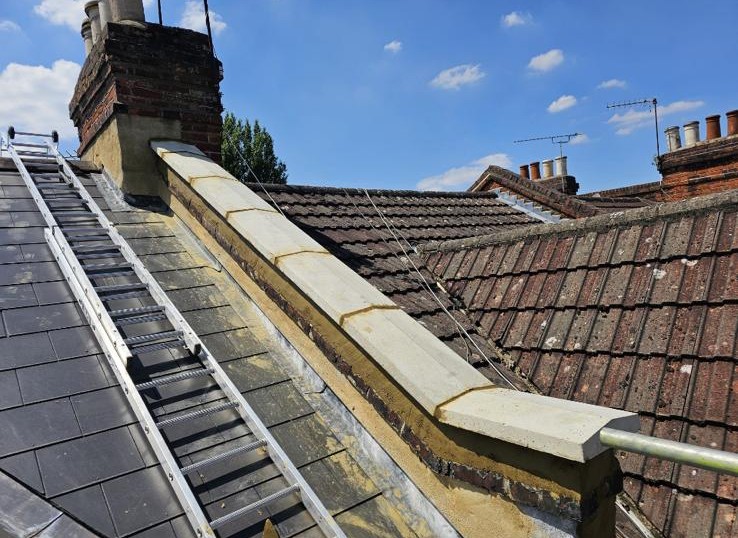
Parapet and valley gutters
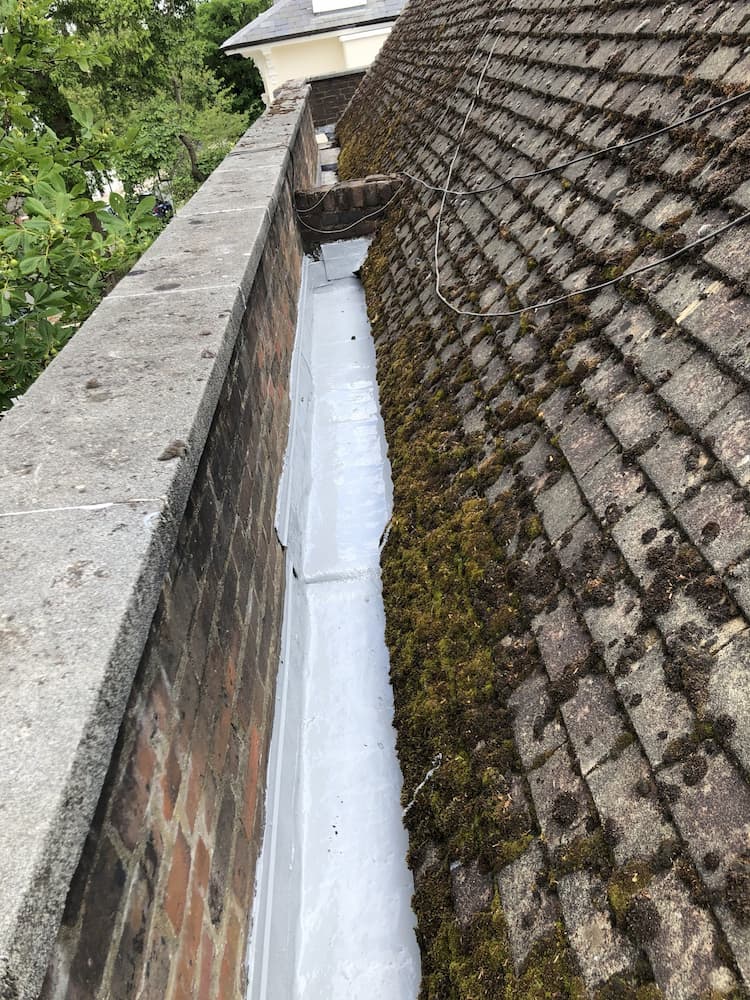
Many London terraces have a front parapet wall hiding a lead-lined gutter that drains through a small outlet to a hopper head. A parapet gutter cannot be seen from the pavement, so a parapet gutter is often the last thing anyone checks. Leaves and silt narrow the outlet, the gutter fills in a downpour, and water spills over the lining into the front wall and the bedroom ceiling below.
Butterfly roofs
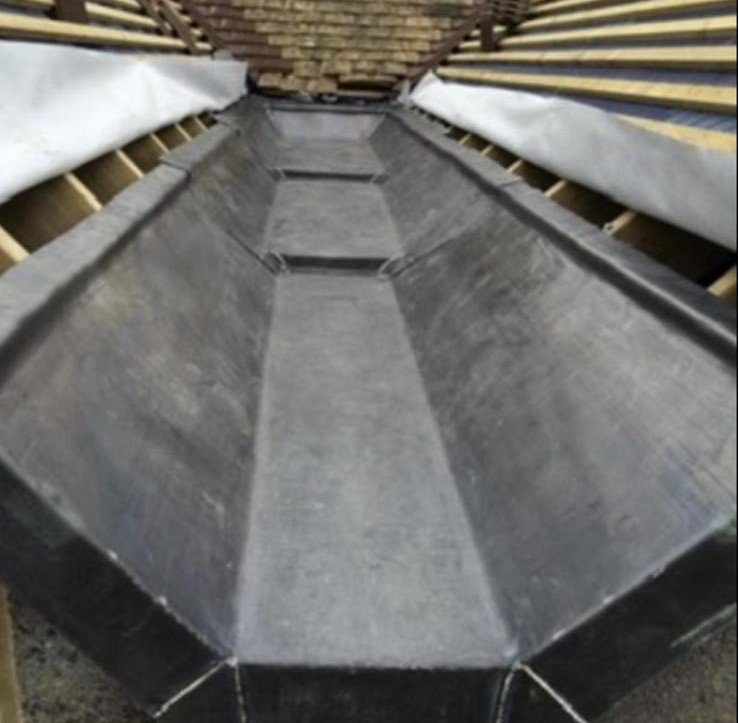
A butterfly roof, also called a London roof, has two slopes falling inwards to a central valley gutter. On most London butterfly roofs the valley drains towards the back of the house, although the arrangement varies from one property to the next. The whole roof drains through that single valley. When the valley blocks or the lead cracks, the leak tends to appear in the middle of the top floor ceiling, well away from any outside wall.
Chimney stacks
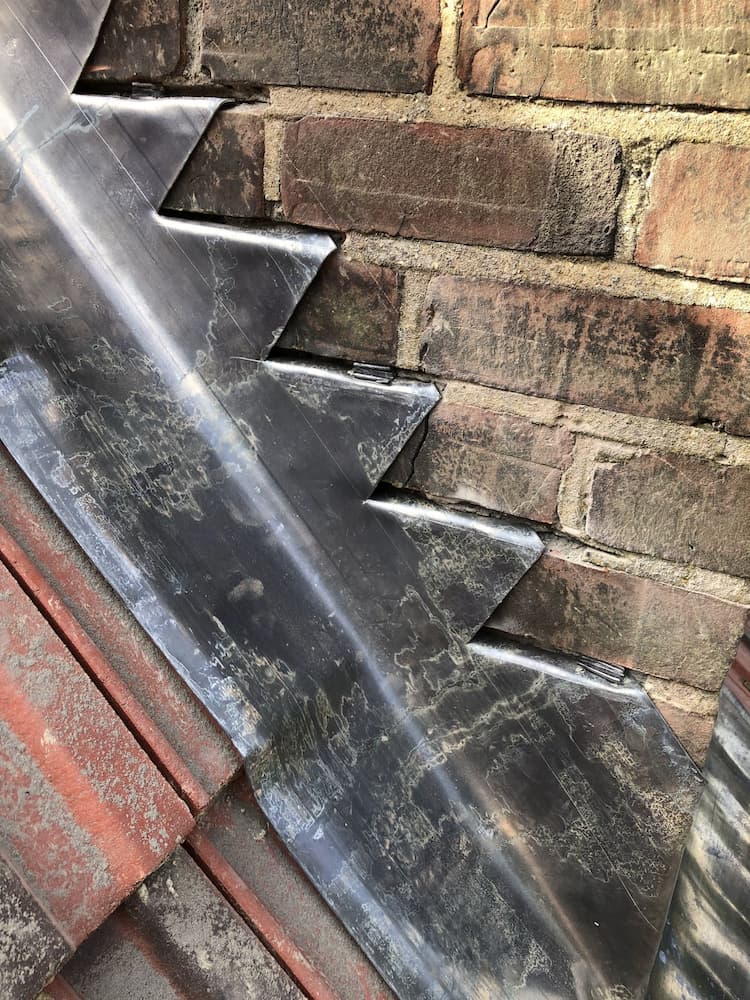
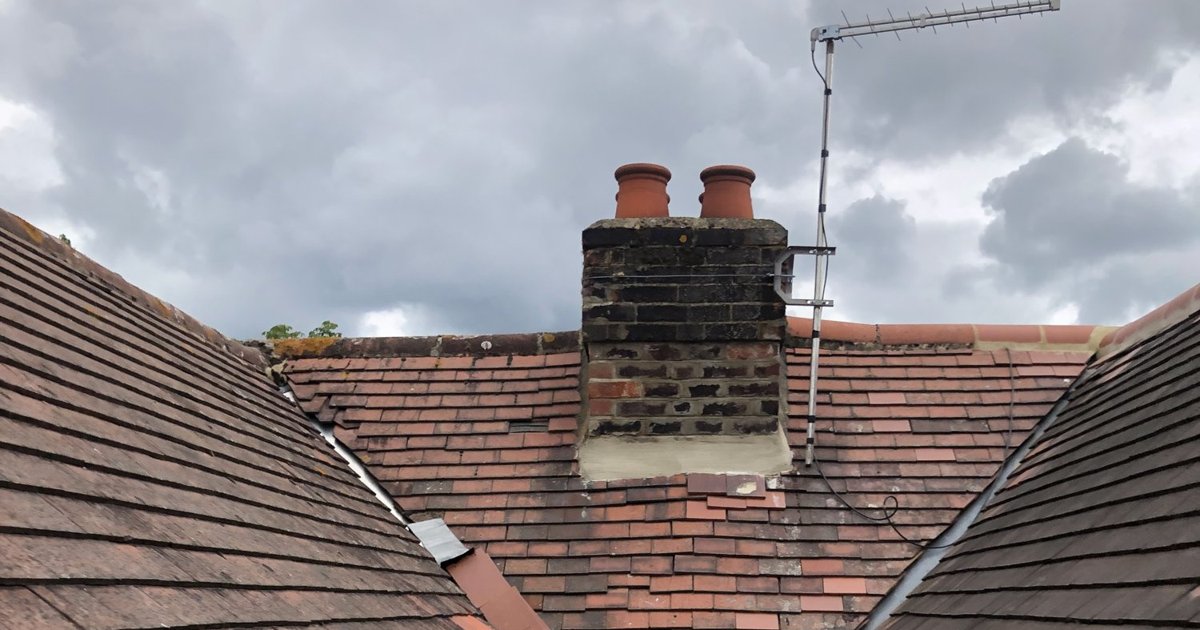
A chimney leaking during heavy rain is one of the most common problems on period houses, because a chimney stack has more joints with the roof than any other feature. Lead flashings seal the sides of the stack, and a lead back gutter on the uphill side catches water running down the slope. Historic England describes these junctions as often the most vulnerable part of the roof. A blocked back gutter overflows in a downpour, and porous brickwork lets water soak into the stack after a long day of rain. Our chimney maintenance page covers the repairs.
Slate and nail sickness
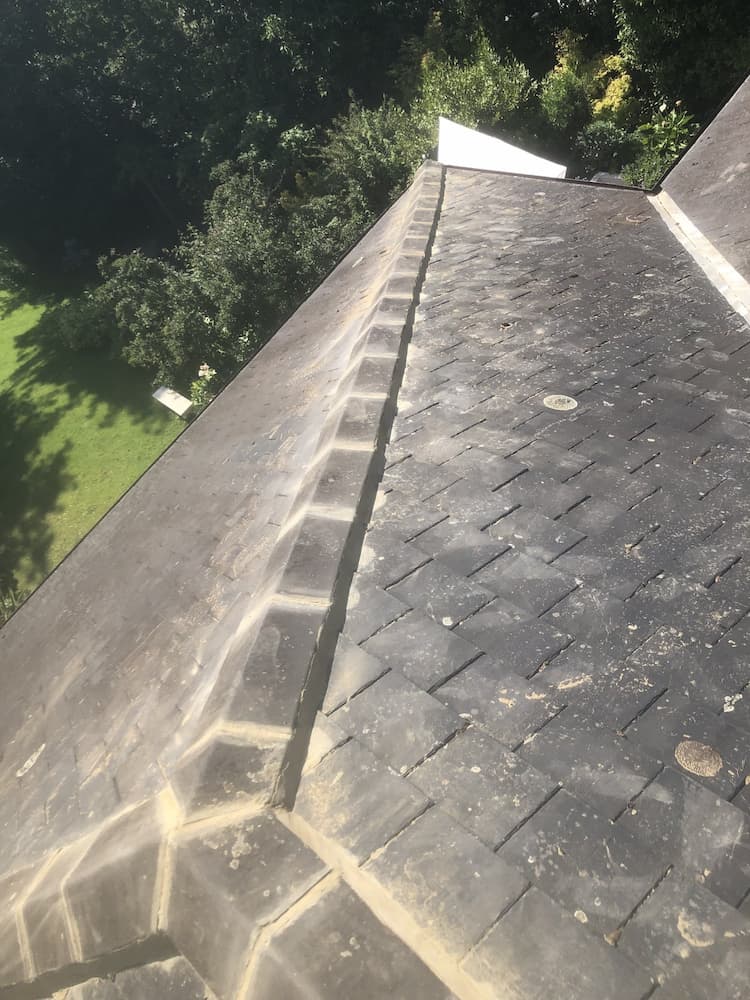
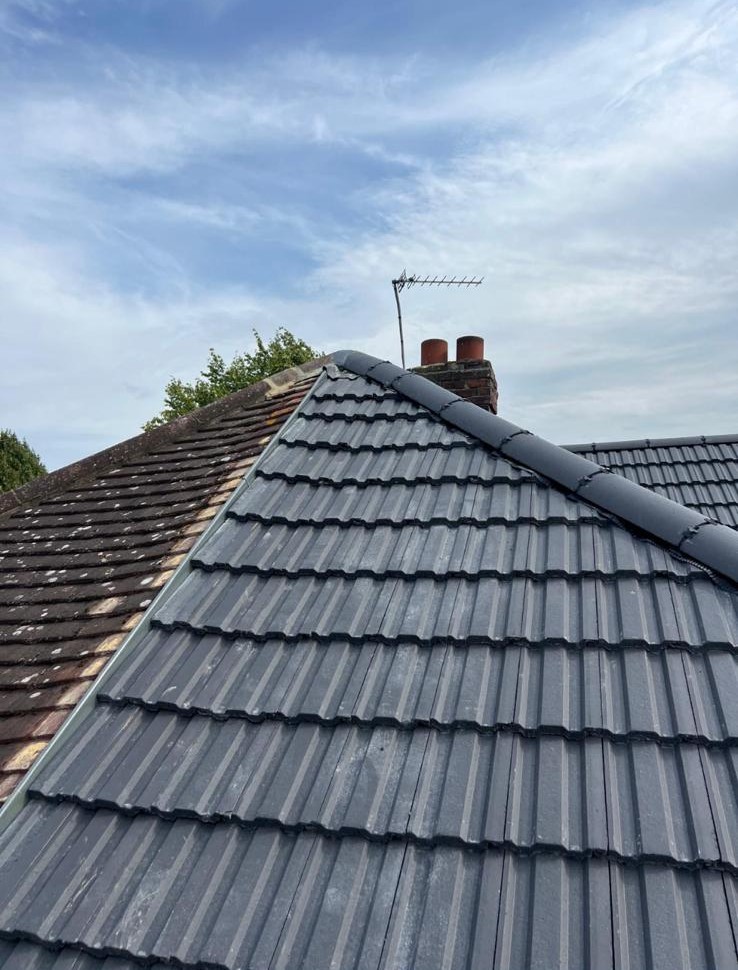
Welsh slate on a Victorian roof can last well over a century, but the nails usually fail first. Historic England calls the problem nail sickness: the nail heads corrode, the holes enlarge and slates start to slip. A slate that has moved only a few millimetres stays dry in calm weather and lets water straight through when rain is driven against the roof. BS 5534, the British Standard code of practice for slating and tiling, sets out how slates should be fixed when a roof is relaid.
Old or missing underlay
Many original Victorian slate roofs were built with no underlay at all, so the slates are the only barrier between the rain and the loft. Roofs renewed since then may have had underlay added, but on an original roof one slipped slate lets heavy rain straight into the roof space.
Rooflights, roof windows and dormers
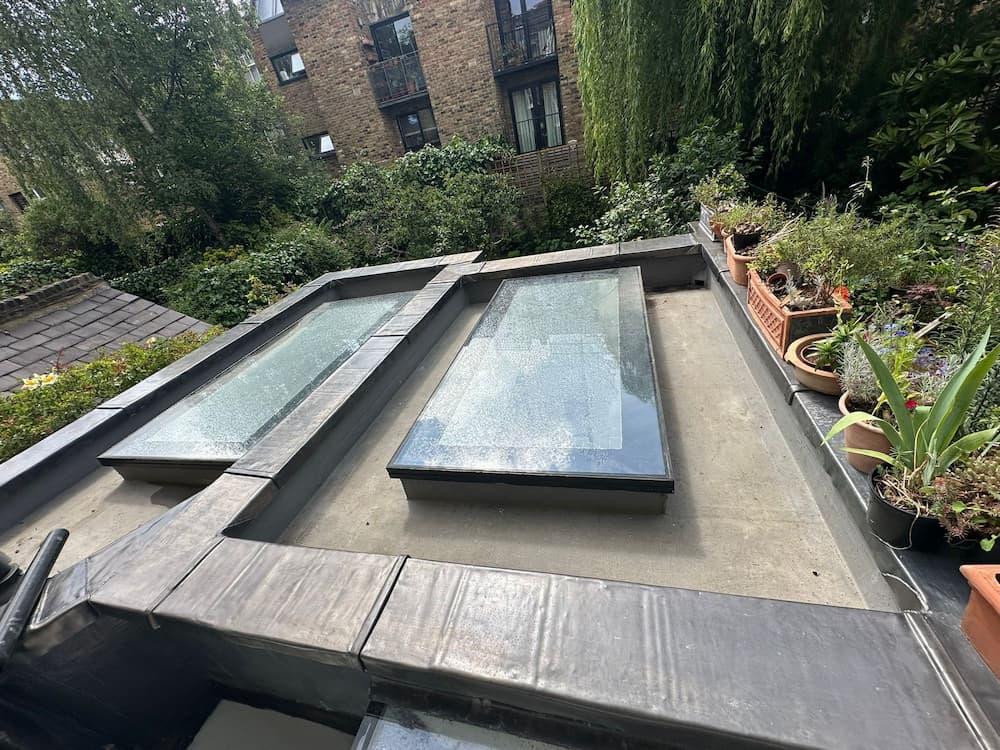
A Velux window leaking in heavy rain is usually leaking through the flashing around the frame, not the glass. Debris collects along the top of the frame and water backs up behind the debris. Dormers and mansards add more lead junctions, and water slows and builds up where a steep slope meets a flatter one.
Flat roof extensions
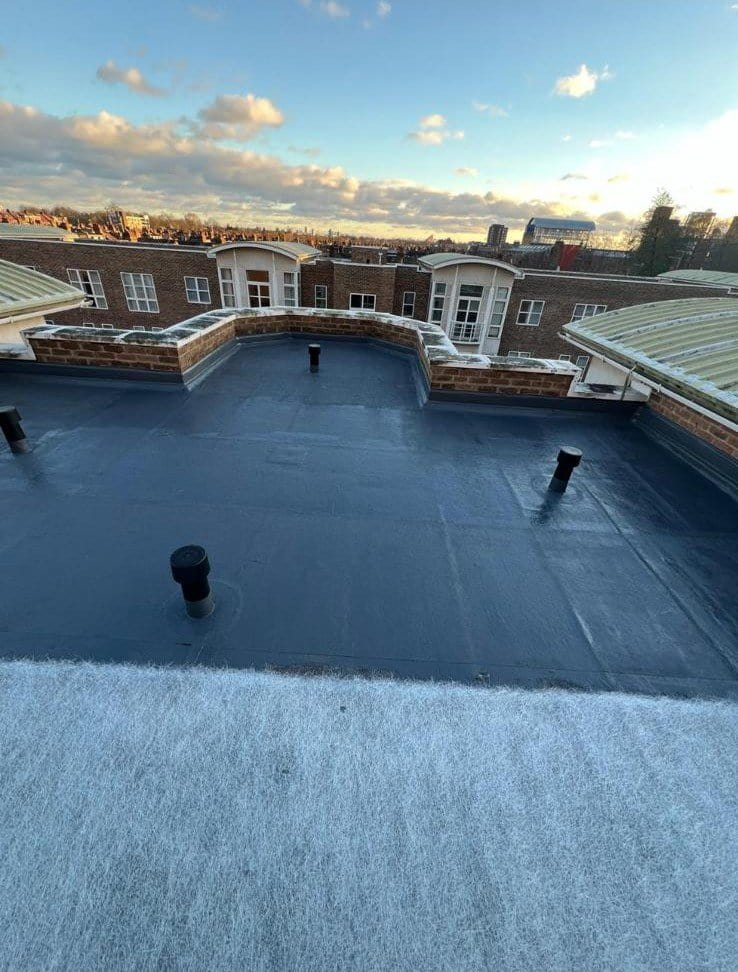
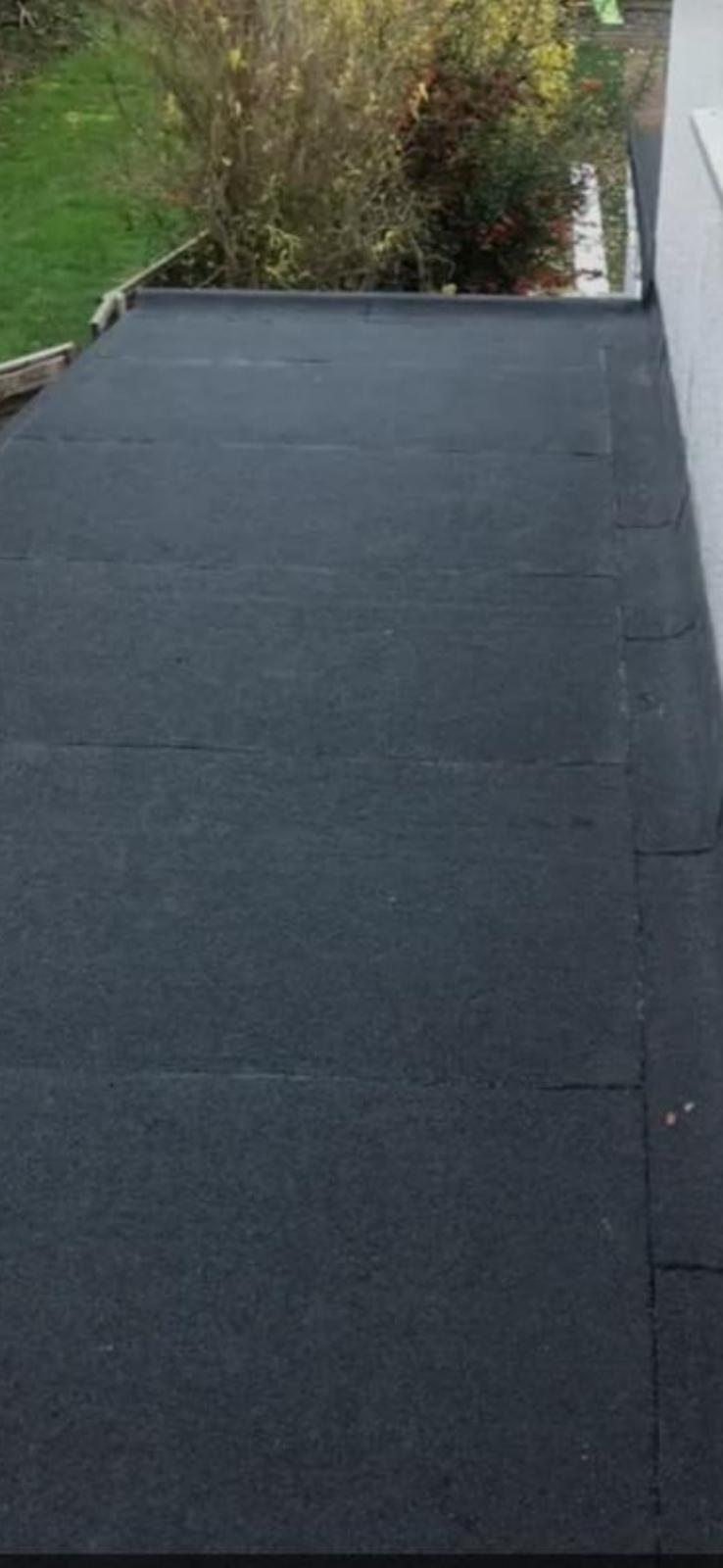
Most London terraces have a back addition or extension with a flat roof. Flat roofs leak in heavy rain at the edges, at upstands where the roof meets a wall, and at outlets that cannot clear water fast enough.
Is it the roof, the gutter or condensation?
Not every damp patch after rain is a roof leak. A gutter overflowing in heavy rain can soak the top of an outside wall and show indoors as damp in an upstairs corner, which looks exactly like a roof leak from inside the room. One Bernard Andrews customer described “water ingress in my bedroom caused by leaking gutters” in a Google review, and the fix was the gutter rather than the roof. Gutters are easiest to check while it is actually raining, because overflows and leaking joints show clearly in a downpour.
Condensation is the other common mix-up. A stain that appears in cold weather, spreads evenly and is worst in a bedroom or bathroom is usually condensation in a poorly ventilated roof space. No work on the slates will fix condensation, because the water comes from inside the house.
Door frames and balcony thresholds can leak in heavy rain too. Ronee left a Google review about a balcony leak that previous tradespeople had tried to fix “numerous times”. Once that leak was fixed, a second leak in the same space turned out to be the door frame.
Why did the last repair not fix it?
A roof leak that returns after a repair usually means the repair treated the place where the water appeared rather than the place where the water got in. Because water travels along timbers, a patch directly above the stain can miss the defect completely. The leak stops for a few weeks of light rain. Then the next downpour arrives.
Sealant is the second common reason. Roofing sealant and tape can hold back water for a season, but sealant does not move with the roof and breaks down in sunlight. Sealant run along a lead flashing pulls away within a few years, because lead expands and contracts with every change in temperature.
Hard cement on a period roof is the third reason. Victorian roofs were built with soft lime mortar, which moves slightly with the building, so cement repairs to ridges, verges and chimney pointing crack and let water in. The Society for the Protection of Ancient Buildings advises that a soft lime mortar should normally be used, not cement, and favours keeping traditional mortar fillets rather than replacing every fillet with lead. The problem on most period roofs is hard cement in the wrong place, not mortar itself.
Temporary fixes while you wait for a roofer
The safest temporary roof leak fix happens inside the house. Climbing onto a wet roof is dangerous, and a tarpaulin fixed without the right equipment can blow off and cause more damage.
- Put a bucket under the drip, with a towel inside to stop splashing, and move belongings away from the wet area.
- If water is near light fittings or sockets, switch off that circuit at the consumer unit if it is safe to do so.
- Keep well clear of a ceiling that is sagging or bulging.
- Photograph the damage and note the time, how long it had been raining and the wind direction.
For water coming in fast, an emergency roofing call-out starts with assessing the problem and making the roof safe and watertight where access and conditions allow. The call-out may involve temporary weatherproofing until a permanent repair can be carried out in suitable weather, and sometimes the permanent repair can be completed on the first visit.
How do you know the repair has worked?
A roof leak that only appears in heavy rain cannot be proved fixed on a dry day. The real test is the next downpour, ideally with the wind from the same direction as before. A roofer who understands intermittent leaks will expect to check the work after rain.
Bernard Andrews customers mention those follow-up checks in their Google reviews. One customer described “a few areas which needed reviewing after rainfall”, with Andrew coming back to check and adjust the work. Bernadette wrote that Andrew “followed up a few days later after rain to make sure that all was still dry”. Sam noted that Andrew “asked me to hold back payment until he had inspected again”.
Photographs of the work help too, because most homeowners cannot see their own roof. After the repair, check the loft and the stained ceiling during the next two or three downpours before redecorating.
Can you claim on home insurance for a leaking roof?
Home insurance usually covers sudden storm damage, not the gradual failure of an ageing roof. A roof that only leaks in heavy rain usually had a defect before the rain arrived, so insurers often treat the leak as wear and tear.
The Association of British Insurers describes a storm as violent weather, usually meaning wind gusts of at least 55mph or torrential rainfall of at least 25mm an hour. Policies set their own definitions, so the policy wording matters most. The ABI also advises arranging temporary emergency repairs, telling the insurer quickly and keeping receipts.
The Financial Ombudsman Service checks whether storm conditions occurred and whether the storm was the main cause of the damage. A complaint is unlikely to succeed where the roof was already in poor condition and the storm just highlighted an existing problem. The practical lesson is simple. Repair a heavy-rain-only leak properly when the leak first appears, rather than waiting for a storm and hoping insurance will pay.
Should you repair or replace the roof?
Most roof leaks that only appear in heavy rain come from a local defect, such as a flashing, a valley, a few slipped slates or a blocked parapet gutter, and a local repair is the right answer. Historic England is clear that nail sickness does not by itself mean the whole roof needs replacing.
Once a large number of slates start to slip, patching slate by slate stops making sense, but a new roof covering is often not needed either. Good Welsh slate frequently outlasts the nails holding it. When the slates are still in good condition, Bernard Andrews strips them carefully and sets them aside, renews the underlay and battens, then refixes the original slates with new nails, adding matching replacements for any slates that are damaged or break during stripping. Keeping the original Welsh slate in this way can be a good cost saving compared with a full re-slate, and the roof keeps its period character.
Honest advice matters, because a homeowner with a recurring leak is easy to frighten into a full re-roof. Isabel described in a Google review other roofers “completely exaggerating the problem”. William wrote that Andrew “talked himself out of doing a job” that other roofers had quoted for.
On a listed building or in a conservation area, speak to the local authority’s conservation officer before changing roofing materials. Our heritage and conservation roofing page covers work on protected buildings. For a roof that leaks in heavy rain anywhere in London, get in touch for a quote or book a roof survey through our roof repairs and maintenance service.
Frequently asked questions
Is it normal for a roof to leak in heavy rain?
No. A sound roof should stay watertight in heavy and wind-driven rain. A roof that leaks only in heavy rain has a defect that ordinary rain is not enough to expose.
Why does my roof leak sometimes and not others?
The defect only lets water in under certain conditions: heavy volume, strong wind from one direction or long spells of rain. Noting the weather each time the leak appears usually narrows down the cause.
How much does it cost to fix a roof that only leaks in heavy rain?
The cost depends on the cause. Clearing a blocked parapet gutter is a small job, while relining a valley or renewing chimney flashings is bigger, and access often makes up much of the cost. Our roof repair cost guide covers typical costs.
How common is it for a new roof to leak?
A new roof should not leak. When a new roof does leak in heavy rain, the fault is usually at a junction such as a flashing or roof window, so contact the installer first.
Will sealant fix a roof that leaks in heavy rain?
Sealant may stop a leak for a short time, but sealant is not a lasting repair. A lasting repair puts right the flashing, slate, valley or gutter that has failed.
Can a roof be repaired in the rain?
Temporary weatherproofing can go on in wet weather to make the roof watertight. Permanent leadwork, slating and lime mortar work need suitable conditions, although a simple permanent repair can sometimes be completed on the first visit.
Why does my flat roof leak in heavy rain?
A flat roof leaks in heavy rain when water cannot drain away quickly enough, usually because of blocked outlets, ponding or weak edges. Our flat roof repair cost guide covers flat roof leaks.
Sources and further reading
- Historic England: Repair or Renew the Roof in an Older Home
- SPAB: Roof Maintenance
- Association of British Insurers: Storms
- Financial Ombudsman Service: Storm Damage